Home › Emergency and Disaster Commercial Demolition
Wrexo Demolition Raleigh provides emergency commercial demolition in Raleigh, NC after fires, storms, and structural failures. We mobilize quickly to secure sites, evaluate risks, and remove unstable portions of buildings. Coordination with insurers, engineers, and authorities keeps work compliant and safe. When your business property is damaged, our team helps stabilize and clear it for recovery.
Wrexo Demolition Raleigh provides professional emergency commercial demolition throughout Raleigh, NC and the surrounding area. Our licensed, insured crew delivers safe, clean, on-time work with a free estimate before anything begins. Call (984) 254-6930 or request your free quote.
Emergency Commercial Demolition in Raleigh When Minutes Matter
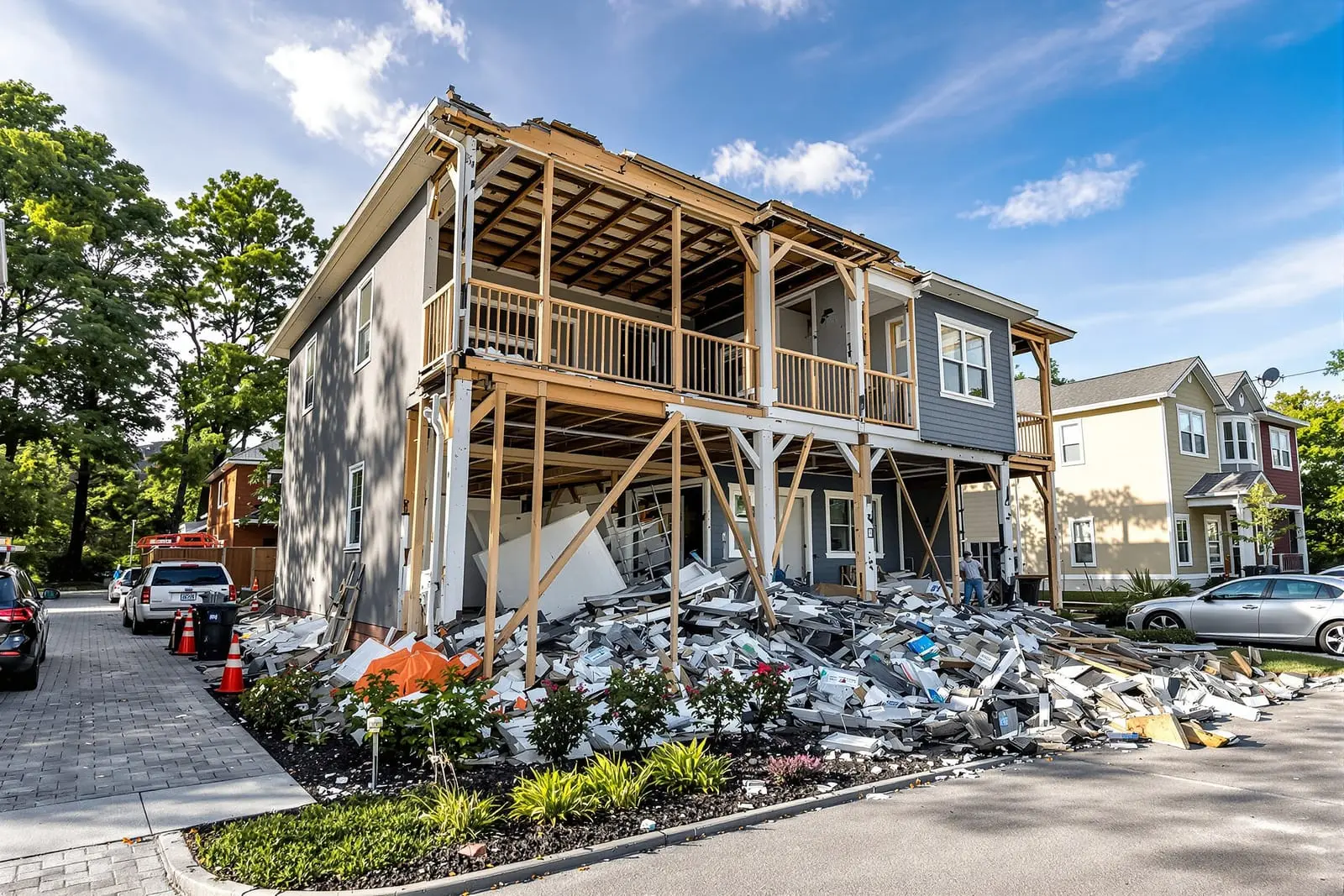
When a storm, fire, vehicle impact, or structural failure makes your commercial building unsafe, you do not have days to wait for help. Wrexo Demolition Raleigh provides rapid emergency commercial demolition across Raleigh and the surrounding Triangle, focused on stabilizing hazards, protecting neighboring properties, and getting you to the rebuild phase as quickly and safely as possible.
We are familiar with the mix of older brick storefronts downtown, 1970s and 1980s shopping centers, modern glass and steel offices, and light industrial warehouses around Capital Boulevard and the I 440 beltline. Each property type behaves differently under stress from fire or wind. Our crews are trained to recognize those differences and adjust methods in real time so unstable sections come down in a controlled way instead of collapsing unpredictably.
Emergency commercial demolition is not just tearing down what is left. It is a coordinated process that starts with structural triage, integrates with firefighters or city inspectors when needed, and ends with a site that is safe for engineers, insurers, and rebuild contractors to access.
What Happens First: Site Arrival and Structural Triage
After your call, we dispatch an emergency team to your Raleigh site, often arriving the same day or within hours depending on conditions. The first priority is to secure the perimeter. We establish exclusion zones with fencing or tape, identify overhead hazards like loose parapets or signage, and shut off utilities if they are still active, working with your providers and emergency services.
Next is structural triage. One of our supervisors walks the accessible areas, reviews any available building plans, and notes how the structure was built. For a brick retail strip in North Hills, we look at load bearing masonry walls and steel bar joists. For a flex warehouse off Glenwood Avenue, we focus on tilt up concrete panels, steel frames, and roof deck connections. We identify which sections are at immediate risk of collapse, which can be temporarily shored, and which can remain untouched until a full engineering review.
Based on this quick but systematic assessment, we create an emergency demolition plan that defines the sequence of removals, access routes for machines, and specific protections for adjacent businesses and sidewalks. This plan is adjusted on site as conditions reveal themselves once debris starts to move.
How We Actually Perform Emergency and Disaster Demolition
Emergency commercial demolition uses many of the same machines as planned demolition, but the work is slower and more surgical. Wrexo Demolition Raleigh typically uses compact excavators and high reach excavators fitted with concrete processors, hydraulic shears, and grapples, so we can bite and peel materials away instead of pushing large sections blindly.
For a fire damaged restaurant or office, the roof is often the most unstable element. We may start by removing HVAC units and weakened roof sections from the outside, creating safe voids before interior debris is touched. In multi tenant buildings, we work bay by bay, isolating party walls so a failure in a damaged unit does not transfer into a relatively undamaged neighbor.
Concrete slabs that are heaved or undermined by water are cut into manageable sections with saws, then removed so underground utilities can be inspected and capped. Where brick or CMU walls lean toward a public street, we will sometimes lace them with cables and pull them inward using an excavator. This prevents outward collapse into sidewalks or lanes that cannot be fully closed.
If there is risk of progressive collapse in a parking deck or multi level structure, we bring in temporary shoring and, when required, coordinate with a structural engineer. Portions may be hand stripped by crew members with breakers and torches in areas where machine vibration could trigger a collapse. All along, a spotter monitors any movement or new cracking and can stop work instantly.
Local Hazards in Raleigh and How We Address Them
Raleigh’s emergency demolition work often follows severe thunderstorms, tornado remnants, or tropical storm events that push trees, signage, and debris into commercial structures. We are experienced in removing large hardwood trees from roofs and walls without causing additional damage. This usually involves incremental cutting from the top down and using cranes or excavators to relieve weight before cutting load bearing limbs.
Older masonry buildings around downtown and along Person and Hillsborough streets can become unstable after prolonged water intrusion or fire. Mortar joints fail, and outward bowing can appear subtle but dangerous. Our crews know to read these signs and may install temporary bracing or perform controlled step down demolition, taking walls down course by course from a man lift.
In light industrial areas such as around Poole Road or Atlantic Avenue, we frequently see metal buildings where wind has peeled back roof panels and compromised the lateral bracing. Here, the danger is panels lifting off and traveling in high winds. We prioritize removing loose sheet metal, signage, and awnings that can become airborne, then address frames and interior collapse zones.
Raleigh traffic and close property lines are another reality. Many commercial buildings sit tight to parking lots and public roads. We plan equipment access so debris and trucks do not block emergency vehicle routes. When needed, we coordinate with the City of Raleigh for lane closures and timing so demolition activity does not collide with peak commute periods or nearby school dismissals.
Cost Factors and Insurance Coordination for Emergency Demolition
Emergency commercial demolition costs in Raleigh can vary widely, and it helps to understand what drives the numbers. The biggest factors are structural complexity, degree of damage, access conditions, hazardous materials, and the urgency of the timeline.
A single story, partially burned retail bay with open parking lot access might be relatively straightforward. A multi story office with a damaged parking deck, zero lot lines, and shared walls will require more engineering input, specialized equipment, and night or weekend hours, all of which increase cost. If asbestos containing materials or lead paint are found, those must be addressed by licensed abatement teams before certain demolition methods can continue.
Most emergency commercial demolitions are part of an insurance claim. Wrexo Demolition Raleigh collaborates with your adjuster by providing detailed estimates, site photos, debris volume projections, and salvage documentation. We can separate strictly necessary emergency work, such as removal of a collapsed roof and unsafe walls, from elective work that you or your insurer may choose to handle later. This clarity often speeds approval and keeps you from paying out of pocket for items that could have been covered.
We also track and document all materials hauled from the site, noting recyclables such as steel, concrete, and clean wood, since some policies require proof that debris was handled properly.
Permits, Safety, and Compliance in an Emergency Context
Even in an emergency, the work still has to meet City of Raleigh requirements and OSHA safety standards. For immediate life safety situations, the city may authorize urgent work to stabilize or partially demolish an unsafe structure while a formal permit is processed. We handle these discussions so you are not stuck between inspectors and insurance carriers.
Before heavy demolition begins, we confirm utility disconnects with the relevant providers. It is not enough to flip breakers or shut valves inside the building. We verify that electrical service is cut at the transformer or meter, natural gas is capped at the street, and water lines are valved off or metered out. This reduces the chance of fire, electrocution, or flooding as debris is moved.
On site, our crews follow a written site specific safety plan. This covers machine zones, fall protection for anyone working near voids or open decks, respiratory protection if there is soot, dust, or possible asbestos, and hot work permits if cutting torches are used. Spotters are assigned to watch overhead conditions, especially in partially collapsed structures where vibration can dislodge materials.
We also consider environmental compliance. Debris is sorted when practical, so hazardous materials do not mix into general waste. Runoff controls may be installed if fire suppression water or stormwater could carry soot or fine debris off site.
What Raleigh Property Owners Should Do Before We Arrive
In an emergency, there are still a few critical steps you can take before Wrexo Demolition Raleigh arrives that will help protect people, speed up the process, and help with your eventual claim.
First, keep everyone out of the affected building, even if some areas appear untouched. Structural failures can migrate. A roof that sagged over the kitchen of a restaurant today can shift over the dining area tomorrow. If firefighters or inspectors cleared you to grab essential items, do so quickly and avoid rooms with visible ceiling damage, cracked walls, or standing water.
Second, notify your insurer as early as possible and tell them you are bringing in a commercial demolition contractor for emergency stabilization or demolition. Ask for your claim number and the name of your adjuster. Share that information with us so we can align our documentation to their needs from the start.
Third, gather any site plans, previous renovation drawings, or mechanical and electrical documents you have. Even partial or old plans help us locate structural walls, columns, chases, and underground utilities, which makes demolition safer and more efficient.
Finally, think ahead to your neighbors. If you share walls, parking, or access drives with other businesses, let them know that emergency demolition work is coming. This gives them time to move vehicles, secure inventory, and plan around short term lane or sidewalk closures. It also reduces conflict on site at a time when you already have enough to manage.
“
Professional emergency and disaster commercial demolition, done right the first time, quality materials, honest pricing, and results that last.
Wrexo Demolition Raleigh
Emergency and Disaster Commercial Demolition Across Our Service Area