Home › Warehouse and Industrial Facility Demolition
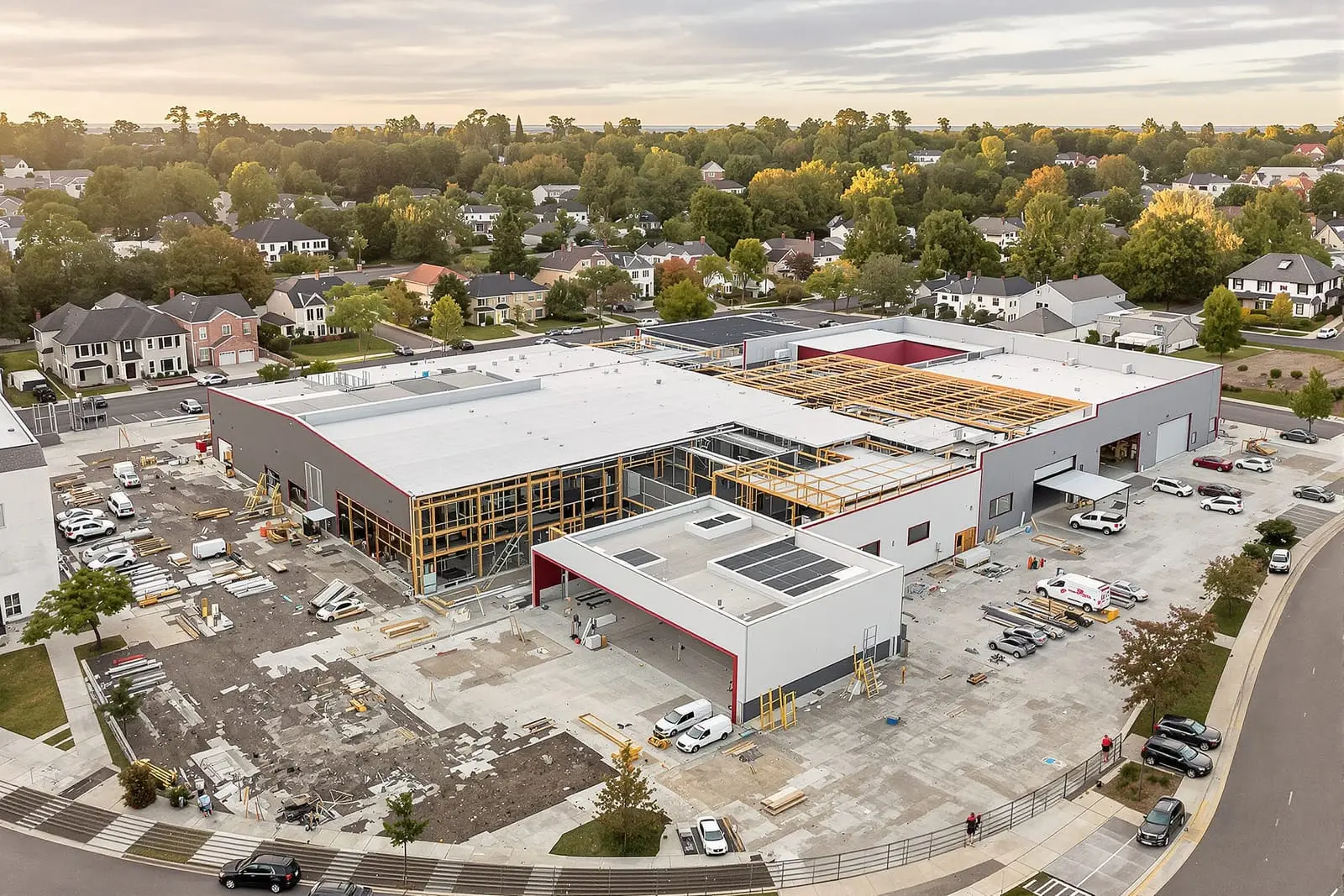
Wrexo Demolition Raleigh specializes in warehouse demolition in Raleigh, NC and surrounding industrial areas. We remove steel frame buildings, loading docks, mezzanines, and heavy equipment with careful sequencing. Our team handles utilities, environmental concerns, and recycling of metals and concrete. Industrial property owners rely on us to clear complex sites for new investment.
Wrexo Demolition Raleigh provides professional warehouse demolition throughout Raleigh, NC and the surrounding area. Our licensed, insured crew delivers safe, clean, on-time work with a free estimate before anything begins. Call (984) 254-6930 or request your free quote.
Warehouse Demolition in Raleigh That Fits Your Operation
If you manage a warehouse or industrial facility in the Raleigh area, you need demolition work that respects your schedule, your neighbors, and your bottom line. At Wrexo Demolition Raleigh, we focus on warehouse demolition and industrial tear downs across Raleigh, Garner, Knightdale, Clayton, and the broader Triangle, from older brick warehouses near Downtown to tilt‑up concrete facilities around the I‑440 and I‑540 corridors.
Most warehouse and plant managers we work with have two priorities: keeping people safe and avoiding disruption to ongoing operations on the rest of the site. We start with a detailed site walk, looking at loading docks, racking systems, mezzanines, boiler rooms, roof height, and access routes for heavy equipment. We ask how you use the rest of your property, what has to stay powered on, and what must be protected, such as adjacent bays, office buildouts, or active production lines.
From there, Wrexo Demolition Raleigh puts together a written plan that breaks the project into phases. For example, we might start by soft stripping interior buildouts while you are still shipping out of neighboring bays, then schedule the structural demolition over a weekend or shutdown period. Our crews are used to working around tractor‑trailers, forklifts, and live inventory, and we coordinate with your safety personnel so our plan fits with your lockout/tagout and access rules.
How Warehouse and Industrial Demolition Actually Works
Warehouse demolition is rarely a simple knock‑it‑down job. In the Raleigh market, we see a mix of 1960s and 1970s brick or block warehouses with heavy steel trusses, 1980s metal buildings with bar joist roofs, and newer tilt‑up concrete facilities. Each type comes apart differently, so the first step is understanding how the building was put together.
Soft strip and separation: We begin by removing non‑structural items such as office partitions, bathrooms, break rooms, suspended ceilings, lighting, pallet racking, mezzanines, and non‑load‑bearing block walls. Anything reusable, from dock levelers to metal racking, can be removed cleanly if you want to resell or relocate it. This phase helps us expose structural elements and reduce hazards.
Utility isolation: Before any heavy equipment moves in, we coordinate with your electrician, plumber, and utility providers to disconnect or reroute power, gas, water, data, fire alarm, and sprinkler systems. For older Raleigh warehouses, this often includes cleaning out abandoned conduit and disconnecting outdated 480‑volt panels or air compressors. We frequently work with local fire marshals to make sure fire suppression is handled correctly, especially if only a portion of a facility is coming down.
Structural demolition: Once utilities are safe, we bring in the right mix of excavators, high‑reach machines, and skid steers. For steel frame warehouses, we typically cut and pull the roof and columns in a controlled sequence to keep the frame from twisting or kicking out. For tilt‑up concrete, we cut panel connections and lay panels down into the footprint. In dense industrial areas of Raleigh where buildings are close together, we use smaller bites and more manual cutting to prevent damage to neighboring structures.
Sorting and loadout: As the building comes down, we separate concrete, masonry, steel, and general debris. Clean concrete can often be crushed for reuse as fill or base stone. Structural steel and metal roofing are loaded for recycling. This material segregation reduces disposal cost and improves environmental performance, which is increasingly important for warehouse owners tied to ESG goals or LEED requirements.
Final grading: After foundations and slabs are handled (removed or partially left in place, depending on your redevelopment plans), we backfill and rough grade the site so it drains correctly and is ready for the next contractor or for temporary trailer storage.
Costs, Timelines, and What Drives Your Warehouse Demolition Budget
Two warehouses of the same size in Raleigh can have very different demolition costs. At Wrexo Demolition Raleigh, we walk you through what is pushing the numbers so you can decide how far to go.
Key cost drivers include:
• Size and height of the structure: A 30,000 square foot warehouse with 32‑foot clear height can cost more to demolish than a 50,000 square foot building with a low roof, simply because high‑reach equipment and extra safety measures are required.
• Building type and construction: Heavy concrete and thick masonry are more labor and equipment intensive to break and haul than lightweight metal siding. Older mill‑type buildings in Raleigh with heavy timber, boilers, or pits often require more careful work.
• Site access: If we can bring excavators in directly off a broad truck court, the job moves faster. Tight lots, shared driveways, or limited staging space in older industrial corridors can add time for equipment moves and debris loading.
• Hazardous materials: Asbestos in roofing, old floor tiles, pipe insulation, or contaminated soils from historic industrial use must be handled by licensed abatement and environmental professionals. We can coordinate this and build it into your schedule and budget.
• Salvage and recycling potential: If your building has significant structural steel, valuable process equipment, or reusable racking, we can plan to remove and segregate those items in a way that may offset part of the demolition cost.
Typical warehouse demolition projects in the Raleigh area run anywhere from a few days for small 10,000 square foot structures with clean access, up to several weeks or months for large multi‑building industrial campuses. We give you a proposed sequence with milestones, so you know when specific areas will be cleared and when you can release or sign new leases, coordinate with your civil contractor, or schedule new construction crews.
Partial Demolition, Decommissioning, and Live‑Site Work
Many of our clients in and around Raleigh are not scrapping an entire facility. They might be shutting down one production line, demolishing half of a warehouse to make room for a new expansion, or converting a distribution center into flex space. Partial demolition inside a live facility requires a very different approach.
We start by mapping what must stay and what can go: columns to remain, shared roof sections, party walls, utilities that feed neighboring tenants, and access routes that must stay open. We often build temporary partitions or fire‑rated separations to isolate our work area from active space. For example, if we are demolishing an old cold storage section attached to a still‑operating food warehouse, we will create dust and temperature control barriers, coordinate shutdowns with your refrigeration contractor, and schedule noisy work outside shipping hours.
Selective structural demolition might involve cutting out a row of columns for a future truck court, removing a section of slab to install new process trenches, or lowering roof areas to meet new use requirements. Wrexo Demolition Raleigh uses saw cutting, core drilling, and torch cutting alongside traditional machine work to keep vibration and noise to a minimum when needed.
On decommissioning projects, especially when a national company is closing a Raleigh facility, we can handle removal of process lines, tanks, overhead conveyors, silos, and in‑plant offices, leaving a clean, broom swept shell for a sublease or sale. We document what is removed with photos and summary reports so corporate real estate teams, landlords, and buyers have a clear record of the condition we turned over.
Permits, Raleigh Regulations, and How to Get Started
Industrial and warehouse demolition in Raleigh is regulated differently than small residential tear downs. Before work begins, you will need the right permits from the City of Raleigh or your specific municipality, plus state notifications if there is asbestos involved.
Wrexo Demolition Raleigh can handle the demolition permit application and coordinate with building inspections. This typically involves submitting site plans, a demolition scope, utility disconnect letters, and, when applicable, asbestos survey documentation. For larger industrial projects, inspectors may also want a clear erosion and sediment control plan so neighboring properties and storm drains are protected.
Noise, traffic, and dust management are also critical in built‑up areas around Raleigh. We plan truck routes that keep heavy traffic off residential streets, use water for dust control, and, when necessary, install fencing and signage to secure the site. If you share access roads or loading docks with nearby businesses, we will coordinate work windows that avoid their peak times and reduce complaints.
To get started, you do not need a complete set of architectural plans. Basic information such as the address, approximate square footage, current or past use, and any available drawings or photos is enough for Wrexo Demolition Raleigh to provide a preliminary budget and timeline. From there, we can perform a detailed site visit, identify any environmental or structural complexities, and refine the proposal so you know exactly what will be demolished, what will remain, and how your operations will be protected during the process.
“
Professional warehouse and industrial facility demolition, done right the first time, quality materials, honest pricing, and results that last.
Wrexo Demolition Raleigh
Warehouse and Industrial Facility Demolition Across Our Service Area