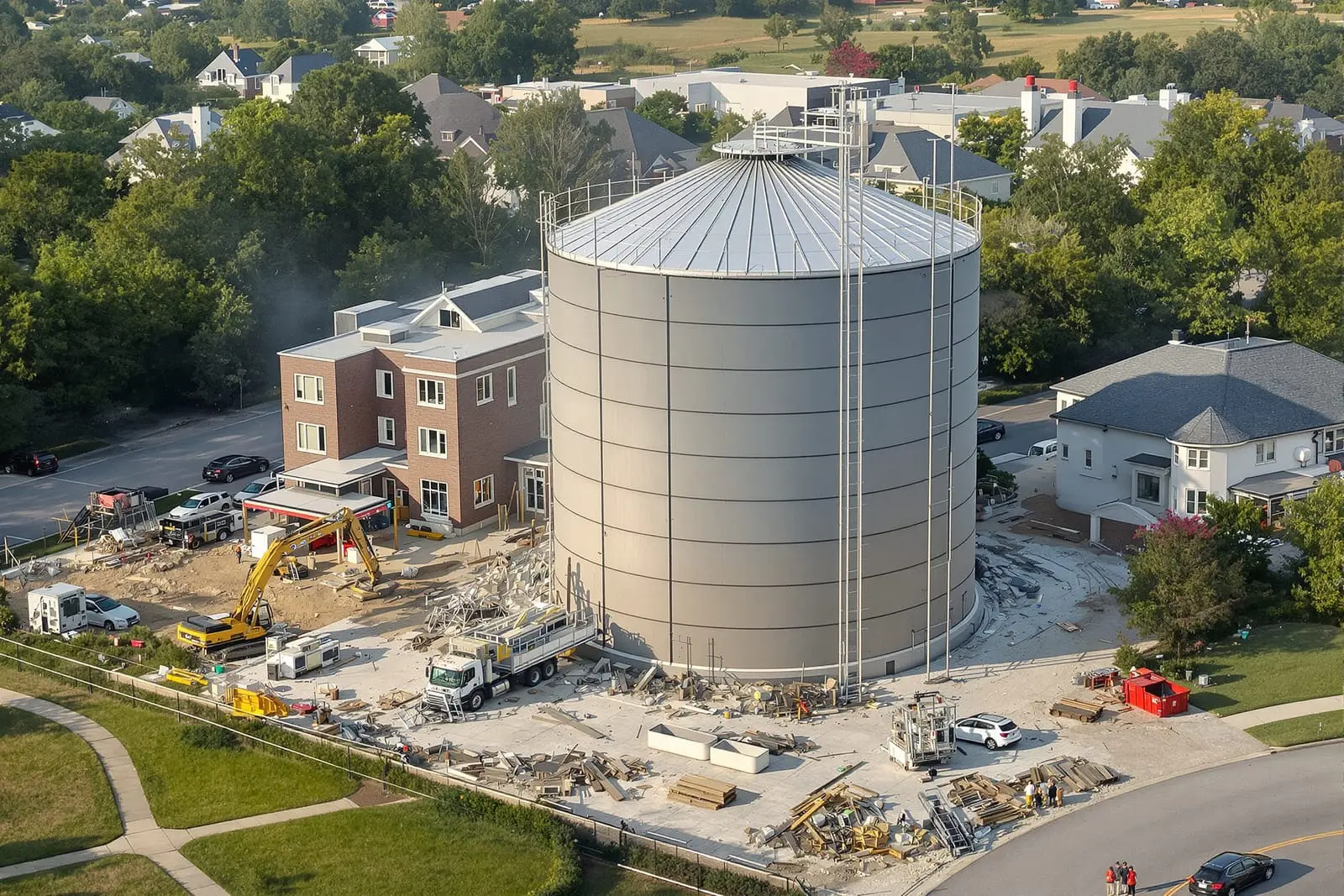
Wrexo Demolition Raleigh provides tank demolition in Raleigh, NC for industrial plants, farms, and utilities. We dismantle or mechanically fell steel tanks, concrete silos, and tall stacks using controlled methods. Confined space, cutting operations, and rigging are managed by experienced crews. Our team safely removes these challenging structures and clears the surrounding site.
Wrexo Demolition Raleigh provides professional tank demolition throughout Raleigh, NC and the surrounding area. Our licensed, insured crew delivers safe, clean, on-time work with a free estimate before anything begins. Call (984) 254-6930 or request your free quote.
Tank, Silo and Stack Demolition in Raleigh, Done the Right Way
If you have an old fuel tank, farm silo, or industrial stack on your property around Raleigh, you already know they are not simple tear-down projects. At Wrexo Demolition Raleigh, we focus on planning-heavy, technical demolition jobs like these so you do not end up with safety issues, surprise costs, or a citation from the city.
Across Wake County, we regularly remove steel and fiberglass tanks at small industrial sites, concrete silos on former agricultural land in places like Rolesville and Zebulon, and tall steel stacks at aging manufacturing facilities closer to downtown. Each one behaves differently when you cut into it, which is why our crews treat every project as its own engineering problem, not just another knockdown.
We start every tank demolition or stack removal with one question: what has been inside this thing for the last 10, 20, or 40 years? That answer drives what permits are needed, how we ventilate, where we cut, and how we protect your soil and nearby structures. Our goal is simple: remove the structure cleanly, protect your property, and leave the site ready for its next use, whether that is a warehouse pad, new construction, or just a safer yard.
How Tank Demolition Actually Works, Step by Step
For above ground storage tanks, especially fuel or chemical tanks that are common around Raleigh's industrial corridors, we follow a specific sequence to keep everyone safe and keep you in compliance.
1. Site visit and documentation. We walk the site with you, photograph access points and overhead lines, measure tank dimensions, and review any records you have on past contents. If you do not have records, we visually inspect for residue, venting, and corrosion to plan for worst case.
2. Isolation and cleaning. Before we cut anything, we verify that product lines are disconnected, valves are locked out, and the tank is completely drained. For former fuel or solvent tanks, we arrange for gas-free certification when required, then we either cold cut or use controlled hot work based on vapor readings. Internal residues are either vacuumed or squeegeed and collected in drums or totes so they can go to an approved facility.
3. Segmenting the tank. Most steel tanks in this area are cut down in sections using torches or saws. We start at the top, create relief cuts, and drop panels inward into the tank shell whenever possible. That reduces the risk of plates falling outward toward nearby structures or traffic. If clearances are tight, we may crane-lift larger segments instead of letting them drop.
4. Handling foundations and anchors. Many tanks in the Raleigh area sit on concrete ring walls or slab-on-grade pads. Once the shell is removed, we break the ring or slab with hydraulic hammers or sawcut and remove only what you want gone. If you plan to rebuild on the same pad, we can leave the foundation intact but clean.
5. Loading and recycling. Steel tank shell and framing are sorted on-site, torch-cut to mill lengths, and hauled to local metal recyclers. Non-recyclable liners or insulation are containerized separately. We track weights so you know what was recycled and what was disposed.
For underground tanks, which are less common now but still show up on older commercial properties, the process adds excavation, shoring when needed, removal of backfill, and soil sampling around the tank cavity. We coordinate with environmental consultants you select or we can recommend firms that frequently work with us in Wake County.
Silo Demolition for Farms, Feed Mills, and Concrete Plants
Raleigh still has plenty of older silos, especially on land that is being converted from agricultural to residential or light commercial use around the edge of the metro area. Whether you have a tall concrete stave silo behind a family farm or a steel grain bin at a feed mill, Wrexo Demolition Raleigh designs the take-down method around your space, your neighbors, and your future plans for the site.
Concrete silos are often brought down in a controlled fall. We evaluate the direction with the most open space, calculate where the structure will land, then carefully cut or chip out a portion of the base wall while leaving a hinge. This lets the silo lay down in a predictable zone instead of collapsing vertically on itself. We barricade that fall area, coordinate with you on timing, and notify any affected neighbors or businesses if noise or vibration will be noticeable.
For silos that are too close to roads, property lines, or power lines to drop safely, we switch to piecemeal methods. That might mean using manlifts or scaffolding to remove panels section by section, or using a high-reach excavator with a shear or pulverizer to nibble the structure from the top down. Each pass is planned so that loosened sections have a safe place to fall, and our spotters stay on the ground to halt work if conditions change.
Interior liners, augers, and chutes are removed and separated before we crush and haul away the main shell. Clean concrete rubble from silos can often be crushed for use as fill or base stone, which can save you disposal costs and reduce the number of truck trips. For agricultural sites transitioning to residential development, that crushed material sometimes stays on-site as structural fill, subject to your engineer’s approval.
Dust control is a big deal with silo demolition, especially in dry Carolina summers. We run water spray systems at the work face and on debris piles so dust does not travel to nearby homes or active businesses. If your project is near a school, daycare, or busy roadway, we schedule the loudest or dustiest work for off-peak times whenever possible.
Stack Removal for Industrial and Commercial Properties
Stacks and chimneys around Raleigh range from short masonry exhaust stacks behind small commercial buildings to tall guyed steel stacks at older manufacturing plants and boiler rooms. Each type requires a different approach, and the limiting factor is almost always access and clearance to adjacent structures and utilities.
For brick or block stacks, we usually work from the top down with a manlift or small scaffold. Workers remove sections of masonry at a time, dropping material inside the stack when possible so bricks do not scatter across your roof or yard. When the stack is integrated into the building, we coordinate with your mechanical contractor to cap or reroute flues and to protect any active equipment.
Steel stacks can often be dismantled in larger pieces using a crane. We rig the upper section, cut it free, swing it to a laydown area, and repeat until we reach the base. This method is common on tight sites in Raleigh where there is no safe direction to fell a stack. If cranes are not an option because of overhead lines or street closures, we may section the stack from a manlift using torches or saws, lowering pieces with chain falls or smaller equipment.
Inside the stack, we look for internal liners, dampers, and accumulated soot or residue. When stacks served boilers or industrial processes that used heavy oils or chemicals, we coordinate with environmental crews to bag and remove contaminated deposits separately. This keeps your waste manifest clean and reduces the risk of delays at disposal facilities.
Roof protection is another local concern. Many stacks sit on older roofs, especially in older brick buildings near Glenwood South and other redevelopment areas. Before work begins, we install temporary mats or cribbing so machinery and falling debris do not punch through aging decking. After the stack is gone, we can leave a flush cut at the roofline and weatherproof the opening temporarily so your roofing contractor can complete permanent repairs without rush.
Costs, Permits, and What Raleigh Property Owners Should Plan For
Tank demolition, silo removal, and stack demolition are driven by a handful of factors, and it helps to understand them before you start getting quotes. At Wrexo Demolition Raleigh, we walk you through each one so your budget conversations are based on specifics, not guesses.
Key cost drivers include:
• Size and height. A small heating oil tank behind a shop might be a one-day job. A 120 foot stack or a 60 foot silo with limited access may require specialized equipment, multiple days, and more labor.
• Prior contents and contamination. Clean water or dry grain is low risk. Former fuel, solvents, or chemical storage means gas testing, possible specialized cleaning, and environmental disposal, which adds cost but also protects you from long-term liability.
• Access and proximity. Tightly packed industrial sites in Raleigh, narrow alleys, residential neighbors close by, and overhead utilities all affect which demolition methods are realistic and how long the setup and protection work will take.
• End state. Removing just the above grade structure is one price. Cutting and hauling the concrete foundation, backfilling and compacting the area for future construction, or preparing the site to meet a geotechnical engineer’s specs adds work but also adds value if you plan to build.
On the permitting side in Raleigh, most tank, silo, and stack demolitions fall under building or demolition permits, and some involve the Fire Marshal if flammable liquids or gases were stored. If the structure is on a commercial or industrial site, there may also be zoning or site plan conditions to consider. Our team can coordinate with your architect or engineer, or we can handle permit applications with the City of Raleigh or nearby municipalities like Cary or Garner as needed.
Before you hire any demolition contractor for tank demolition or similar work, ask for specifics: how will they clean and gas free the tank, how will they control dust and debris, who is responsible for hauling and disposal, and what documentation you will receive at the end. Wrexo Demolition Raleigh typically provides haul tickets, recycling weights, and copies of any disposal manifests so you have a clear record for future buyers, lenders, or regulators.
If you are not sure exactly what you have on site, that is fine. We are happy to come out, identify the structure type, talk through realistic options, and give you a detailed written proposal so you can make a confident decision about your tank, silo, or stack removal.
“
Professional tank, silo and stack demolition, done right the first time, quality materials, honest pricing, and results that last.
Wrexo Demolition Raleigh
Tank, Silo and Stack Demolition Across Our Service Area